

 English
 Spanish
 French
 German
 Italian
 Chinese (Simplified)
 Japanese
 Korean
 Arabic
 Portuguese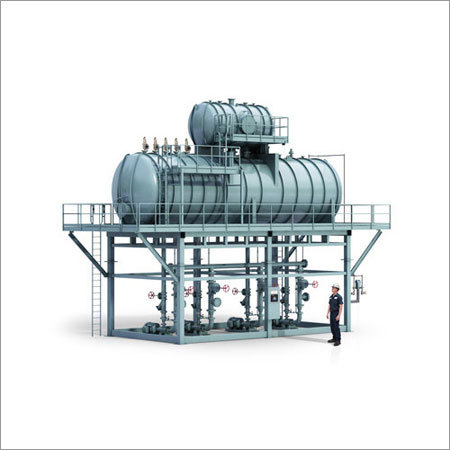
Industrial Deaerators
300000.00 - 2500000.00 INR/Unit
Product Details:
- Condition New
- Power 7.5 kW
- Product Type Industrial Deaerator
- General Use Removal of dissolved gases from liquid
- Material Stainless Steel (SS 304/316)
- Capacity 5000-50000 LPH (customizable)
- Weight (kg) 1500 kg
- Click to View more
X
Industrial Deaerators Price And Quantity
- 1 , , Piece
- 300000.00 - 2500000.00 INR/Unit
Industrial Deaerators Product Specifications
- Corrosion Resistant, Low Maintenance, High Efficiency
- Industrial Deaerator
- Direct Coupled
- 5000-50000 LPH (customizable)
- Yes
- Yes
- 380-440 V, 50 Hz
- 1500 kg
- Approx. 3200 x 1400 x 2200 mm
- Stainless Steel (SS 304/316)
- Removal of dissolved gases from liquid
- High-torque Shaft
- 7.5 kW
- Yes
- Rotary Mixing
- Metallic Silver/Grey
- New
- Siemens/ABB Electric Motor
- < 75 dB(A)
- Overload Protection, Pressure Release Valve
- 5C to 95C
- Automatic with Level Sensors
- 0.02-0.15 MPa
- Stainless Steel with Touch Screen
- Flanged
- Polyurethane Foam Insulation
- Beverage, Pharma, Food Processing, Boiler Feedwater
- Mirror/Matte Available
- Multi-stage
Industrial Deaerators Trade Information
- 20 , , Piece Per Week
- 10 Days
Product Description
Industrial Deaerators have been specifically made to be used for removing dissolved gases from water. They are known to work on principle of employing use of trays & spray valves thus assuring longer contact time between water & steam. These deaerators are highly effective in nature and assure automatic processing. They are most commonly used for boiler feed water and are known to have long service life. Industrial Deaerators operates by reducing partial pressure inside tank which results in decrease of solubility of gas hence assuring its safe & easy removal.
Technical specification
| Minimum Order Quantity | 1 Number |
| Application | Mixture |
| Material | Stainless Steel |
| Function | Separation Pressure Vessel |
High-Performance Gas Removal
This deaerator utilizes a multi-stage air venting mechanism and rotary mixing technology to assure effective removal of oxygen and other gases, crucial for improving water and liquid quality in industrial processes. Its robust construction and computerized operation minimize operator intervention, ensuring consistent results.
Intelligent Control & Safety Features
Automatic water level sensors, overload protection, a pressure release valve, and a PLC-operated touch screen control panel enhance operational safety and precision. These smart features make monitoring straightforward and help prevent potential disruptions during continuous production runs.
Versatile Industrial Applications
Designed for beverage, pharmaceutical, food processing, and boiler feedwater operations, this deaerators customizable capacities and material options cater to diverse sector-specific requirements. Its corrosion-resistant build and low maintenance profile make it an ideal choice for demanding environments.
FAQs of Industrial Deaerators:
Q: How does the industrial deaerator remove dissolved gases from liquids?
A: The deaerator uses a rotary mixing process combined with a multi-stage air vent system to efficiently separate and expel dissolved gases, including oxygen and carbon dioxide, from liquids. This process enhances the purity and quality required for industrial applications.Q: What industries benefit from using this deaerator?
A: Industries such as beverage manufacturing, pharmaceuticals, food processing, and boiler feedwater treatment benefit from the deaerators gas removal capabilities. Its design supports varying capacities and strict hygiene standards, fitting seamlessly into these sectors.Q: When should this deaerator be operated within the provided temperature and pressure ranges?
A: Operate the deaerator between 0.02-0.15 MPa and temperatures from 5C to 95C for optimal gas removal and system efficiency. Staying within these ranges ensures safe operation and longevity of internal components.Q: Where is the best installation location for this equipment in an industrial facility?
A: Install the deaerator close to liquid entry points or upstream of sensitive applications such as boilers or product fillers. This minimizes pipe runs and integrates easily with existing process lines using flanged connections.Q: What process controls are included for managing operation and safety?
A: The deaerator is equipped with automatic level sensors, a touch screen stainless steel control panel with PLC control, overload protection, and a pressure release valve to manage functions and safeguard against operational faults.Q: How does the computerized PLC system improve usage and efficiency?
A: The PLC system automates the deaerators operations, precisely controlling mixing, venting, and safety mechanisms. This results in reduced operator input, greater consistency, higher efficiency, and easy customization of process parameters.Q: What are the major benefits of using stainless steel construction and polyurethane foam insulation?
A: Stainless steel SS 304/316 offers enhanced corrosion resistance and hygiene, while polyurethane foam insulation limits energy loss, increases temperature stability, and improves operational safety in demanding industrial environments.Tell us about your requirement

Price:
Quantity
Select Unit
- 50
- 100
- 200
- 250
- 500
- 1000+
Additional detail
Mobile number
Email


SPARES INDIA WATER TECHNOLOGIST
GST : 24ADEPK6915F1ZR
GST : 24ADEPK6915F1ZR
Contact Us

- 119, Rajdeep Industrial Estate, Near Vatva Tolnaka, Vatva,Ahmedabad - 382440, Gujarat, India
- Phone :08045479347
|


- Mr Hitesh Ganpatlal Khambholja (Proprietor)
- Mobile :08045479347
- Send Inquiry
 Send Inquiry
 Send Inquiry
 Send SMS
SPARES INDIA WATER TECHNOLOGIST
All Rights Reserved.(Terms of Use)
Developed and Managed by Infocom Network Private Limited.
Developed and Managed by Infocom Network Private Limited.

