

 English
 Spanish
 French
 German
 Italian
 Chinese (Simplified)
 Japanese
 Korean
 Arabic
 Portuguese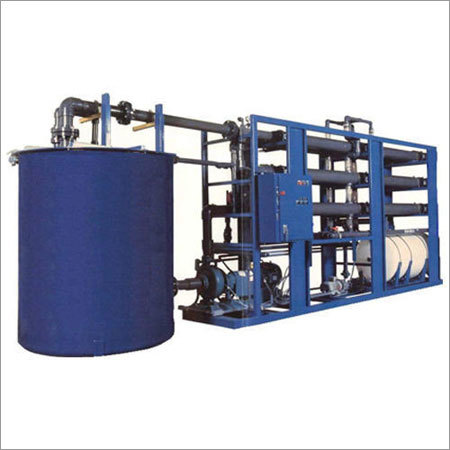
Micro Filtration System
300000.00 - 2500000.00 INR/Unit
Product Details:
- Product Type Micro Filtration System
- Type Filtration Unit
- Filter Type Cartridge / Membrane
- Filtration Grade Micro Filtration
- Medium Water / Liquid
- Automation Semi-Automatic
- Dimension (L*W*H) 1200mm x 800mm x 1800mm
- Click to View more
X
Micro Filtration System Price And Quantity
- 300000.00 - 2500000.00 INR/Unit
- 1 , , Piece
Micro Filtration System Product Specifications
- 1200mm x 800mm x 1800mm
- Micro Filtration System
- Water / Liquid
- Filtration Unit
- White & Blue
- Semi-Automatic
- 220 V / 50 Hz
- Cartridge / Membrane
- Approx. 200 kg
- Micro Filtration
- Flanged / Threaded
- Customizable as per requirement
- 32 mm / 25 mm
- CIP (Clean-In-Place) Compatible
- Up to 60C
- Stainless Steel 304/316
- Water Treatment, Industrial Process, Pharmaceuticals, Food and Beverage
- 0.1 - 10 micron
- 2-5 bar
- 1000 - 5000 LPH
Micro Filtration System Trade Information
- 20 , , Piece Per Week
- 10 Days
Product Description
We have gained huge recognition in the market by providing superior quality Micro Filtration System. Manufactured by our adroit professionals using premium quality components and latest technology, we provide this filtration system in various specifications according to the specific requirements of the customers. Tested on different quality parameters, provided filtration system is used in different industries such as chemical, pharmaceutical & other related industries for removing harmful contaminants from the water. Our valuable customers can avail this Micro Filtration System from us at most reasonable price range.
Technical Specification
Minimum Order Quantity | 1 Unit |
Composition | Equipment |
Voltage | 3phase/380(220,400,415,440)V/50(60)Hz |
Process | Milling,Brewing,Fermentation,Filtration |
Robust and Hygienic Construction
Crafted from stainless steel 304/316, the micro filtration system ensures high resistance to corrosion and excellent durability. Its hygienic design makes it especially suitable for sensitive industries such as pharmaceuticals and food & beverage, allowing for safe and reliable liquid filtration.
Versatile Application Range
This unit efficiently serves water treatment plants, industrial processes, pharmaceutical manufacturing, and food and beverage operations. Its flexibility in flow rate and pore size supports the varied filtration demands of different sectors, maximizing operational adaptability.
Easy Maintenance and Cleaning
Featuring CIP (Clean-In-Place) compatibility, the system simplifies regular maintenance without dismantling. This not only reduces downtime but also ensures consistent performance and sanitary operation, critical for industries with stringent cleanliness standards.
FAQs of Micro Filtration System:
Q: How does the Micro Filtration System operate in different industries?
A: The Micro Filtration System operates by passing liquids through cartridge or membrane filters with pore sizes ranging from 0.1 to 10 microns, effectively separating suspended particles and microorganisms. Industries such as water treatment, pharmaceuticals, and food and beverage benefit from its versatile, customizable flow rates and CIP-cleanable design.Q: What are the advantages of stainless steel 304/316 construction in this system?
A: Stainless steel 304/316 offers excellent corrosion resistance and structural durability. This ensures longevity in harsh process environments and compatibility with various chemicals, making it suitable for hygiene-critical applications in both industrial and sanitary sectors.Q: When should the filters be cleaned or replaced?
A: Filter cleaning or replacement depends on the quality of the input medium and usage frequency. Generally, the systems CIP compatibility allows for routine cleaning, but filters should be monitored and replaced when there is a significant decline in flow rate or increased pressure drop across the unit.Q: Where can this filtration unit be installed?
A: The unit is designed for indoor installation in facilities such as water treatment plants, pharmaceutical processing areas, and food and beverage production lines. Its compact dimensions and customizable inlet/outlet sizes accommodate integration into existing pipelines or new setups.Q: What is the filtration process used by this system?
A: The micro filtration process involves pressurized liquid flowing through fine-pored cartridges or membranes, capturing impurities without altering the liquids key properties. This method delivers high-quality filtered output suitable for downstream use or consumption.Q: How does the Clean-In-Place (CIP) feature enhance operational efficiency?
A: CIP compatibility allows in-line cleaning of the filtration system without disassembly, minimizing downtime, maintaining hygiene standards, and streamlining maintenance. This is especially beneficial for industries with continuous production requirements.Q: What benefits does using this micro filtration system provide?
A: Key benefits include high-efficiency particle removal, durability, process continuity owing to semi-automatic operation, adaptability for different flow rates, and hygienic performance. Industries achieve enhanced product quality, operational reliability, and reduced maintenance costs.Tell us about your requirement

Price:
Quantity
Select Unit
- 50
- 100
- 200
- 250
- 500
- 1000+
Additional detail
Mobile number
Email


SPARES INDIA WATER TECHNOLOGIST
GST : 24ADEPK6915F1ZR
GST : 24ADEPK6915F1ZR
Contact Us

- 119, Rajdeep Industrial Estate, Near Vatva Tolnaka, Vatva,Ahmedabad - 382440, Gujarat, India
- Phone :08045479347
|


- Mr Hitesh Ganpatlal Khambholja (Proprietor)
- Mobile :08045479347
- Send Inquiry
 Send Inquiry
 Send Inquiry
 Send SMS
SPARES INDIA WATER TECHNOLOGIST
All Rights Reserved.(Terms of Use)
Developed and Managed by Infocom Network Private Limited.
Developed and Managed by Infocom Network Private Limited.

