

 English
 Spanish
 French
 German
 Italian
 Chinese (Simplified)
 Japanese
 Korean
 Arabic
 Portuguese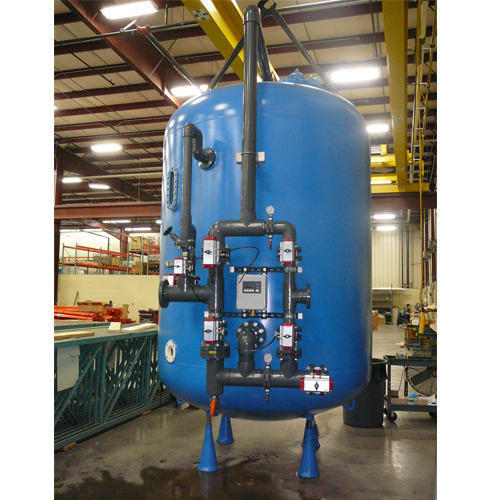
Industrial Dealkalizers
Product Details:
- Flow Rate 1,000 20,000 LPH
- Water in conductivity <1000 S/cm
- Power Consumption 0.5 to 3 kW
- Water Out Conductivity <20 S/cm
- Usage & Applications Boiler Feed, Industrial Water Softening, Power Plant, Chemical Industries
- Noise Level <70 dB
- Technology Ion Exchange System
- Click to View more
X
Industrial Dealkalizers Price And Quantity
Industrial Dealkalizers Product Specifications
- 220-240V AC
- Resin Based/Pre & Post Carbon
- Centrifugal/Dosing
- 97%
- Up to 98%
- 6.5-8
- High Durability, Corrosion Resistant, Low Maintenance
- 1-20 m3/hr
- <70 dB
- FRP/SS304/SS316
- 50-60 Hz
- Ion Exchange System
- Semi-Automatic/Automatic
- <20 S/cm
- Electric
- 500-5000 Litres
- Boiler Feed, Industrial Water Softening, Power Plant, Chemical Industries
- Electric Motor
- Skid Mounted/On-Site Installation
- <1000 S/cm
- 1,000 20,000 LPH
- Borewell/Industrial Feed Water
- Up to 99%
- 0.5 to 3 kW
- Dealkalizer Unit
- Digital/Analog
- 6-10 Bar
- Automatic Multiport/Manual
- 5C 55C
- ISO 9001:2015 Certified
- Epoxy Coated/Powder Coated
- PLC/Relay Based
- 1 2.5 inch
- 3 5 Years
- Co-current/Counter-current with NaCl
Product Description
Technical Specification
| Minimum Order Quantity | 1 Unit |
| Application | Boiler Feed Water,Heat Exchange |
| Type | Water MIX BED Demineralization |
| Material | Carbon Steel,S.S.,FRP or to customize |
| Capacity | 250 LPH |
Efficient Ion Exchange Technology for Dealkalization
Leverage the power of ion exchange with resin-based filtration and NaCl regeneration for high-efficiency dealkalization. Our systems maintain exceptional water quality with conductivity below 20 S/cm, ensuring suitability for sensitive boiler and industrial processes. The flexible regeneration methods allow customization for various water chemistries and operational needs, improving overall efficiency.
Durable Construction and Superior Flow Rates
Built with corrosion-resistant materials like FRP, SS304, and SS316, these dealkalizers are engineered for longevity and safety in demanding environments. With customizable flow rates from 1,000 to 20,000 LPH and pressure ratings up to 10 bar, they easily adapt to varying industrial scales. Epoxy or powder coating enhances surface durability for long-term use.
Smart Control and Low Maintenance Operation
Equipped with digital or analog displays and PLC/relay-based control panels, operation and monitoring are seamless. The automatic multiport or manual valve types cater to different operator preferences, while the low maintenance design reduces downtime. Centrifugal/dosing pumps and electric motors ensure stable, efficient function with power consumption as low as 0.5 kW.
FAQs of Industrial Dealkalizers:
Q: How does the NaCl regeneration process work in these dealkalizers?
A: The NaCl regeneration process involves flushing the ion exchange resin with a sodium chloride solution, which restores its dealkalization capacity. This can be performed in either co-current or counter-current mode, optimizing efficiency while maintaining low water out conductivity below 20 S/cm.Q: What are the ideal industrial applications for these dealkalizers?
A: These dealkalizers are best suited for boiler feed water treatment, industrial water softening, chemical processing industries, and power plants. Their excellent efficiency, high durability, and adaptability make them a reliable choice for demanding water quality needs.Q: When is it necessary to replace the resin inside the dealkalizer unit?
A: Resin replacement is typically required every 3 to 5 years, depending on the volume of treated water, feed water quality, and operational frequency. Regular monitoring and scheduled maintenance ensure consistent performance and extend resin lifespan.Q: Where can these dealkalizers be installed?
A: These systems can be skid-mounted for easy integration or installed directly on-site, offering flexibility for various industrial facility layouts. They are deployed widely in India for both new projects and system upgrades.Q: What are the benefits of using a PLC/relay-based control panel in these units?
A: PLC/relay-based control panels provide automated system management, user-friendly operation, and precise monitoring. This minimizes human error, enhances reliability, and simplifies maintenance, leading to improved operational efficiency.Q: How does the system ensure compliance with water quality standards?
A: With ISO 9001:2015 certification, strict process controls, and digital/analog conductivity monitoring, the system guarantees water out conductivity below 20 S/cm and maintains pH between 6.5 and 8, consistently meeting industrial requirements.Q: What features contribute to the low maintenance of these dealkalizers?
A: High durability materials, corrosion-resistant finishes, ergonomic valve designs, and user-friendly control systems reduce the need for frequent repairs or upkeep. Efficient regeneration and robust component selection further extend service life and reliability.Tell us about your requirement

Price:
Quantity
Select Unit
- 50
- 100
- 200
- 250
- 500
- 1000+
Additional detail
Mobile number
Email

Other Products in 'Demineralization Water Plant' category

SPARES INDIA WATER TECHNOLOGIST
GST : 24ADEPK6915F1ZR
GST : 24ADEPK6915F1ZR
Contact Us

- 119, Rajdeep Industrial Estate, Near Vatva Tolnaka, Vatva,Ahmedabad - 382440, Gujarat, India
- Phone :08045479347
|


- Mr Hitesh Ganpatlal Khambholja (Proprietor)
- Mobile :08045479347
- Send Inquiry
 Send Inquiry
 Send Inquiry
 Send SMS
 Call Me Free
SPARES INDIA WATER TECHNOLOGIST
All Rights Reserved.(Terms of Use)
Developed and Managed by Infocom Network Private Limited.
Developed and Managed by Infocom Network Private Limited.

