

 English
 Spanish
 French
 German
 Italian
 Chinese (Simplified)
 Japanese
 Korean
 Arabic
 Portuguese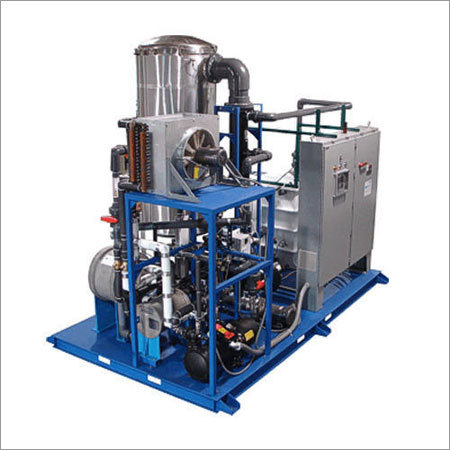
Zero Waste Water Discharge System
300000.00 - 2500000.00 INR/Unit
Product Details:
- Power Consumption Typically 25-100 kW as per design
- Water Out Conductivity <10 S/cm
- Feature Corrosion resistance, Energy efficient, Modular design
- Recycle Rate Up to 95%
- Flow Rate As per application demand
- Frequency 50/60 Hz
- Water in conductivity Varies depending on input source
- Click to View more
X
Zero Waste Water Discharge System Price And Quantity
- 1 Unit
- 300000.00 - 2500000.00 INR/Unit
Zero Waste Water Discharge System Product Specifications
- < 75 dB(A)
- Fully Automatic
- Electric motor driven pumps
- Up to 99%
- Industrial waste water, municipal sewage
- Containerized or Plant-based
- 380V / 415V, 3 Phase, 50 Hz
- Membrane filtration, MEE, RO, Evaporation, Crystallization
- Membrane / Cartridge / Multimedia
- Industrial, Pharma, Textile, Chemical, Power Plants
- Stainless Steel / FRP / MS with coating
- Centrifugal, submersible, dosing pumps
- From 1 m/day up to 500 m/day or more
- 50/60 Hz
- Electric
- Up to 98%
- Varies depending on input source
- 6.5 - 8.5 (output)
- Zero Liquid Discharge (ZLD) System
- As per application demand
- Typically 25-100 kW as per design
- Corrosion resistance, Energy efficient, Modular design
- Up to 95%
- <10 S/cm
- Customizable as per requirement
- Weatherproof, IP65 rated
- Onsite commissioning and AMC available
- High/Low level alarms, Overflow protection
- Compact design, scalable
- 5C to 50C
- Silver/Grey (Custom as required)
- Up to 25 Bar
- PLC/SCADA based operation
- Meets CPCB/SPCB norms
- Automated sludge dewatering
- Continuous or batch operation
- Clarifiers, DAF, Filtration units
- Export standard safe packing
Zero Waste Water Discharge System Trade Information
- 20 Unit Per Week
- 10 Days
Product Description
Having years of experience in this field, we manufacture and trade best grade Zero Waste Water Discharge . The offered plant is mainly used for different water treatment plant of waste liquid without discharging waste water. Offered in different technical specifications as given below, the provided plant is assembled according to industrial norms using optimal quality components. In addition to this, our customers can purchase this Semi-Automatic or Automatic Zero Waste Water Discharge form us at most reasonable rates.
Product Details:
Automatic Grade: Semi-Automatic,Automatic
Installation Service : Yes
Specifications:
- Centrifuge Technology Use: Filter
- Centrifuge Installation: Vertical
- Technology: Reverse Osmosis
- Capacity: 500-1000 LPH
- Material: SS, FRP
Technical Specification
| Technology | Reverse Osmosis |
| Country of Origin | Made in India |
| Inlet Water Quality | Waste Water |
| Water Source | Industrial Effluent |
| Capacity (KLD) | 12 KLD - 24 KLD |
| Control Module | Available |
| Deliver Type | PAN India |
| Inlet Flow Rate(m3/day) | 50 m3/day |
| Installation Type | Prefabricated |
| Material Of Construction | Stainless Steel |
| Warranty | 1 Year |
Cutting-edge Pretreatment Technology
Employing a combination of clarifiers, dissolved air flotation (DAF), and advanced filtration units, the system effectively removes suspended solids, oil, and other contaminants. This multi-stage pretreatment ensures optimal membrane lifespan, higher filtration efficiency, and helps the system achieve rigorous discharge quality norms set by CPCB/SPCB, regardless of fluctuating influent conditions.
Comprehensive Automation and Safety
The entire process is governed by PLC/SCADA-based automation, allowing for continuous or batch operations with minimal manual intervention. Weatherproof, IP65-rated control panels assure dependable performance in diverse environments. Integrated safety features such as high/low level alarms and overflow protection maximize operational safety and minimize downtime.
Flexible, Scalable, and Space-saving Design
Designed to be modular and compact, the system efficiently fits both containerized and plant-based installations. Its customizable volumes and flow rates accommodate diverse industries and varying wastewater loads, making it ideal for power plants, pharma, textiles, chemicals, and more. The robust, corrosion-resistant construction guarantees longevity and minimal maintenance.
FAQs of Zero Waste Water Discharge System:
Q: How does the Zero Waste Water Discharge System ensure compliance with CPCB/SPCB discharge norms?
A: The system incorporates advanced pretreatment such as clarifiers, DAF, membrane filtration, and additional treatment stages like MEE, RO, evaporation, and crystallization. These processes collectively reduce impurities and ensure that the discharge water meets or exceeds CPCB/SPCB requirements for quality and safety.Q: What industries can benefit from installing this wastewater discharge system?
A: A wide array of industries, including pharmaceutical, textile, chemical, power generation, and municipal sewage plants, can adopt this system. Its scalable design and robust material options enable it to handle varying wastewater characteristics and loads effectively.Q: When is onsite service support and annual maintenance available for this system?
A: Onsite commissioning is provided during installation. Ongoing support, including annual maintenance contracts (AMC), is available post-installation to ensure optimal system performance and minimal downtime.Q: Where can the system be installed, and how is the installation process handled?
A: The system is modular and compact, allowing for flexible installation either as containerized units or integrated into existing plant infrastructure. Installation is handled by expert technicians who also offer training and commissioning as part of the service support.Q: What process technologies are used to achieve high purity and recycle rates?
A: The system combines membrane filtration, reverse osmosis (RO), multiple-effect evaporation (MEE), and crystallization processes. These technologies ensure removal of a wide spectrum of contaminants, resulting in up to 99% water purity and a recycle rate of up to 95%.Q: How is residual sludge managed in the system?
A: Automated sludge dewatering mechanisms efficiently handle residuals generated during treatment. This minimizes manual handling, reduces waste volume, and simplifies subsequent disposal or processing steps.Q: What are the key benefits of using this zero discharge solution over conventional systems?
A: Key advantages include high energy efficiency, modularity for scalability, comprehensive automation with safety protections, low operational noise (<75 dB), corrosion resistance, export-worthy packaging, and the ability to consistently deliver treated water that can be safely discharged or reused, supporting sustainability and regulatory compliance.Tell us about your requirement

Price:
Quantity
Select Unit
- 50
- 100
- 200
- 250
- 500
- 1000+
Additional detail
Mobile number
Email

Other Products in 'Treatment Plant' category


SPARES INDIA WATER TECHNOLOGIST
GST : 24ADEPK6915F1ZR
GST : 24ADEPK6915F1ZR
Contact Us

- 119, Rajdeep Industrial Estate, Near Vatva Tolnaka, Vatva,Ahmedabad - 382440, Gujarat, India
- Phone :08045479347
|


- Mr Hitesh Ganpatlal Khambholja (Proprietor)
- Mobile :08045479347
- Send Inquiry
 Send Inquiry
 Send Inquiry
 Send SMS
SPARES INDIA WATER TECHNOLOGIST
All Rights Reserved.(Terms of Use)
Developed and Managed by Infocom Network Private Limited.
Developed and Managed by Infocom Network Private Limited.

